

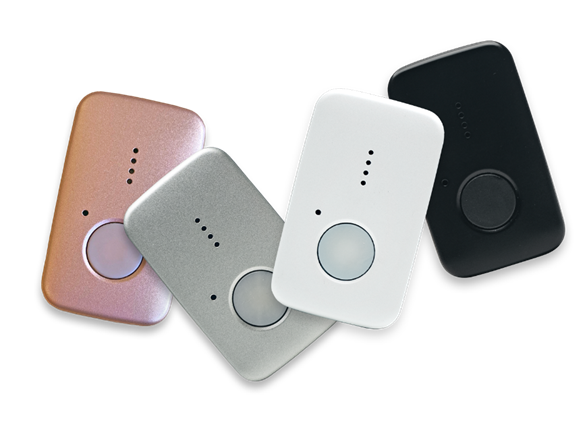

Best Medical Alert Systems with Fall Detection 2026
If you are shopping for a parent who lives alone, the question is simple: if Mom falls and cannot press the button, will help still come? That is what fall detection is for. This guide ranks the four medical alert systems with fall detection that we sell, shows what each really costs per month, and tells you which one fits which situation.
Quick answer
• Best overall: MGMini. Mobile, GPS, 5+ day battery, from $44.95/mo plus $9.99/mo for fall detection.
• Best for the home, no landline: Home 2.0. Cellular base station, 1,400 ft range, from $37.95/mo.
• Best watch-style wearable: MGMini Lite. Water-resistant (IP67) with GPS, from $44.95/mo.
• Best budget pick (has a landline): Classic Guardian. From $29.95/mo.
On every system, fall detection is an optional add-on at $9.99/month.
What Is Automatic Fall Detection, and How Does It Work?
Automatic fall detection uses motion sensors in the wearable device to recognize the pattern of a fall. When it senses one, it signals the 24/7 monitoring center without anyone pressing a button. An operator then speaks with the wearer, or sends help if there is no answer.
It matters because falls are common. The CDC reports that over 14 million older adults, or 1 in 4, report falling every year, and the fall death rate for older adults rose 21% between 2018 and 2024 (CDC, Older Adult Falls Data). A button only helps if the person can reach it. Fall detection covers the case where they cannot.
No fall detection is perfect. It can miss a slow slide to the floor, and it can trigger on a hard sit-down or a dropped device. That is why we sell it as an add-on you can cancel if it does not suit the wearer. For more, see how fall detection works.
How We Compared These Systems
We compared the four systems on the points families ask about most:
• Coverage: does it work only at home, or also outside, with GPS?
• Real monthly cost: the plan price plus the $9.99 fall detection add-on.
• Battery and backup: how often it must be charged, and what happens in a power cut.
• Wearability: size, weight, and water resistance, because a device that stays in a drawer protects no one.
• Setup: whether it needs a landline or Wi-Fi.
The specs and prices below come from each product page, checked October 19, 2026. We have not run independent lab tests, so we do not publish accuracy percentages. If you want to talk through a specific situation, contact our team or call 1-888-816-8868.
Best Medical Alert Systems with Fall Detection: 2026 Comparison
|
System |
Best for |
Plan from (per month) |
With fall detection* |
GPS |
Battery / backup |
Needs landline? |
|
Active seniors, on the go |
$44.95 |
$54.94 |
Yes (GPS and Wi-Fi) |
5+ days, 4-hour charge |
No (4G LTE) |
|
|
Home use, no landline |
$37.95 |
$47.94 |
No |
32-hour backup |
No (4G LTE and Wi-Fi) |
|
|
A watch-style wearable |
$44.95 |
$54.94 |
Yes |
Up to 3 days, 3-hour charge |
No (4G LTE) |
|
|
Lowest cost, with a landline |
$29.95 |
$39.94 |
No |
32-hour backup |
Yes |
*Essential plan plus the $9.99/month fall detection add-on. Premiere plans start at $54.95 (MGMini and MGMini Lite), $47.95 (Home 2.0) and $39.95 (Classic Guardian) and discount fall detection and the protection plan by 50%; see each product page for exactly what is included. Shipping is calculated at checkout.
1. MGMini: Best Overall
The MGMini is the one to pick if your parent still walks, gardens, shops or drives. It works at home and away from home, so one device covers both.
• Price: Essential from $44.95/mo, Premiere from $54.95/mo. Fall detection adds $9.99/mo.
• Size: 2.15 x 1.3 x 0.57 in., 0.08 lbs. It comes with a belt clip, lanyard and charging cradle, in four colors.
• Battery: up to 5 days, with a 4-hour recharge.
• Location: GPS and Wi-Fi, with caregiver tracking included.
• Connection: nationwide 4G LTE on AT&T and Verizon, with a two-way speaker. No landline needed.
Pros: works anywhere, the smallest and lightest in our line, long battery, water-resistant for daily wear including the shower.
Cons: fall detection is an extra $9.99/mo, and it has to be charged every few days.
Choose it if: your parent leaves the house and you want location and fall detection in one device. See the on-the-go collection for all mobile options, or our guide to systems with GPS and fall detection.
2. Home 2.0: Best for the Home Without a Landline
The Home 2.0 is a cellular base station plus a help button worn as a necklace or wristband. It suits a parent who is mostly at home and does not want to charge a device daily.
• Price: Essential from $37.95/mo, Premiere from $47.95/mo. The Fall Detection Pendant adds $9.99/mo.
• Range: up to 1,400 ft from the base for the necklace or wristband, and up to 500 ft for the wall button.
• Backup: 32 hours of battery backup if the power goes out.
• Connection: 4G LTE and Wi-Fi on AT&T's network. No landline.
• Talk: two-way voice through the base station. The wearable button itself does not talk.
Pros: long range covers a yard or garage, no daily charging of the wearable, optional wall buttons for the bathroom ($2.99/mo, or $4.99/mo voice-activated).
Cons: no GPS, so it does not protect away from home. The base station is not water-resistant, though the help buttons are.
Choose it if: your parent is home most of the day. Browse all in-home systems.
3. MGMini Lite: Best Watch-Style Wearable
The MGMini Lite is worn on the wrist like a watch. That helps with a parent who will not wear a pendant but will wear a watch.
• Price: Essential from $44.95/mo, Premiere from $54.95/mo. Fall detection adds $9.99/mo (6-axis sensing).
• Size: 0.7 oz without the strap, with an XL band option.
• Battery: up to 3 days, with a 3-hour recharge.
• Location: continuous, on-demand nationwide GPS over 4G LTE. No smartphone required.
• Water: water-resistant, IP67. Do not submerge it, and dry it with a towel after it gets wet.
Pros: looks like a normal watch, GPS included, wrist placement keeps the button easy to reach.
Cons: shorter battery than the MGMini, and it should not be submerged.
Choose it if: style and comfort decide whether the device gets worn. Our medical alert watch guide and necklace vs. bracelet comparison can help you decide the form factor.
4. Classic Guardian: Best Budget Pick With a Landline
The Classic Guardian plugs into an active landline. It is the simplest and lowest-priced option, with no new technology to learn.
• Price: Essential $29.95/mo, Premiere from $39.95/mo. Fall detection adds $9.99/mo.
• Range: up to 1,300 ft between the pendant and the base.
• Backup: 32 hours of battery backup.
• Talk: two-way voice through the base station only. The pendant and wristband do not talk.
Pros: lowest monthly price, familiar setup, water-resistant pendants and wristbands.
Cons: needs an active landline (check with your carrier if your landline runs through a modem), no GPS, and the base station is not water-resistant.
Choose it if: your parent still has a landline and rarely leaves home. No landline? Choose the Home 2.0 instead.
Are Medical Alert Watches With Fall Detection Worth It?
Yes, for people who will actually wear one. A watch-style device removes the stigma of a pendant. The trade-off is battery life: watches need charging more often. The MGMini Lite above is our watch-style option with GPS. We also offer the MG Move smartwatch from $39.95. For a side-by-side look at bracelets, see our bracelet buyer's guide.
Which System Should You Choose?
|
If your parent... |
Choose |
|
Walks, gardens, shops or drives alone |
|
|
Is mostly at home and has no landline |
|
|
Will not wear a pendant but will wear a watch |
|
|
Has a landline and wants the lowest price |
|
|
Lives alone and you live far away |
|
|
Also misses medication doses |
Pair any system with the Smart Pillbox |
How to Choose a Medical Alert System With Fall Detection
1. Start with where your parent spends time. Home only means an in-home system. Out and about means a mobile device with GPS.
2. Check the real monthly total. Add the $9.99 fall detection fee, and any wall buttons or protection plan you want.
3. Ask what they will wear. Involve your parent. A device that feels medical or bulky often ends up on the nightstand.
4. Check the connection. No landline or Wi-Fi? Choose a cellular system.
5. Look at the monitoring. All of our systems connect to a 24/7 monitoring center. Read the How It Works page for what happens after a button press.
Still unsure? Our buyer's guide and product info page go deeper. Care teams can start at For Care Professionals.
Frequently Asked Questions
What is the best medical alert system with fall detection?
For most people, the MGMini, because it adds GPS and a 5+ day battery to fall detection and works at home and away. For someone who stays home and has no landline, the Home 2.0 is the better fit.
How does fall detection work on a medical alert system?
Sensors in the wearable detect the motion pattern of a fall and signal the 24/7 monitoring center automatically, with no button press. An operator then tries to speak with the wearer and sends help if needed.
How accurate is fall detection?
No fall detection catches every fall, and some will trigger on a hard sit-down or a dropped device. Treat it as an extra layer on top of the help button, not a replacement. If false alarms are a problem, the add-on can be canceled.
How much does a medical alert system with fall detection cost per month?
On our Essential plans, from about $39.94/mo for the Classic Guardian up to $54.94/mo for the MGMini or MGMini Lite, which includes the $9.99/mo fall detection add-on. Premiere plans and add-ons such as wall buttons or the protection plan change the total.
Do medical alert systems with fall detection work without a landline?
Yes. The MGMini, MGMini Lite and Home 2.0 use cellular service (4G LTE) and need no landline. Only the Classic Guardian requires one.
Can you wear a fall detection device in the shower?
The MGMini is water-resistant for daily wear, including the shower. The MGMini Lite is IP67 water-resistant but should not be submerged. The Home 2.0 and Classic Guardian help buttons are water-resistant, but their base stations are not. Falls often happen in the bathroom, so this matters.
Does Medicare pay for a medical alert system?
Original Medicare generally does not cover medical alert systems. Some Medicare Advantage plans and state or local programs offer help, so ask your plan before you buy.
The Bottom Line
Pick the system that matches where your parent spends the day and what they will wear. For most families that is the MGMini. Staying home with no landline points to the Home 2.0. Talk to a real person before you order: call 1-888-816-8868 or send us a message.
Leave a comment